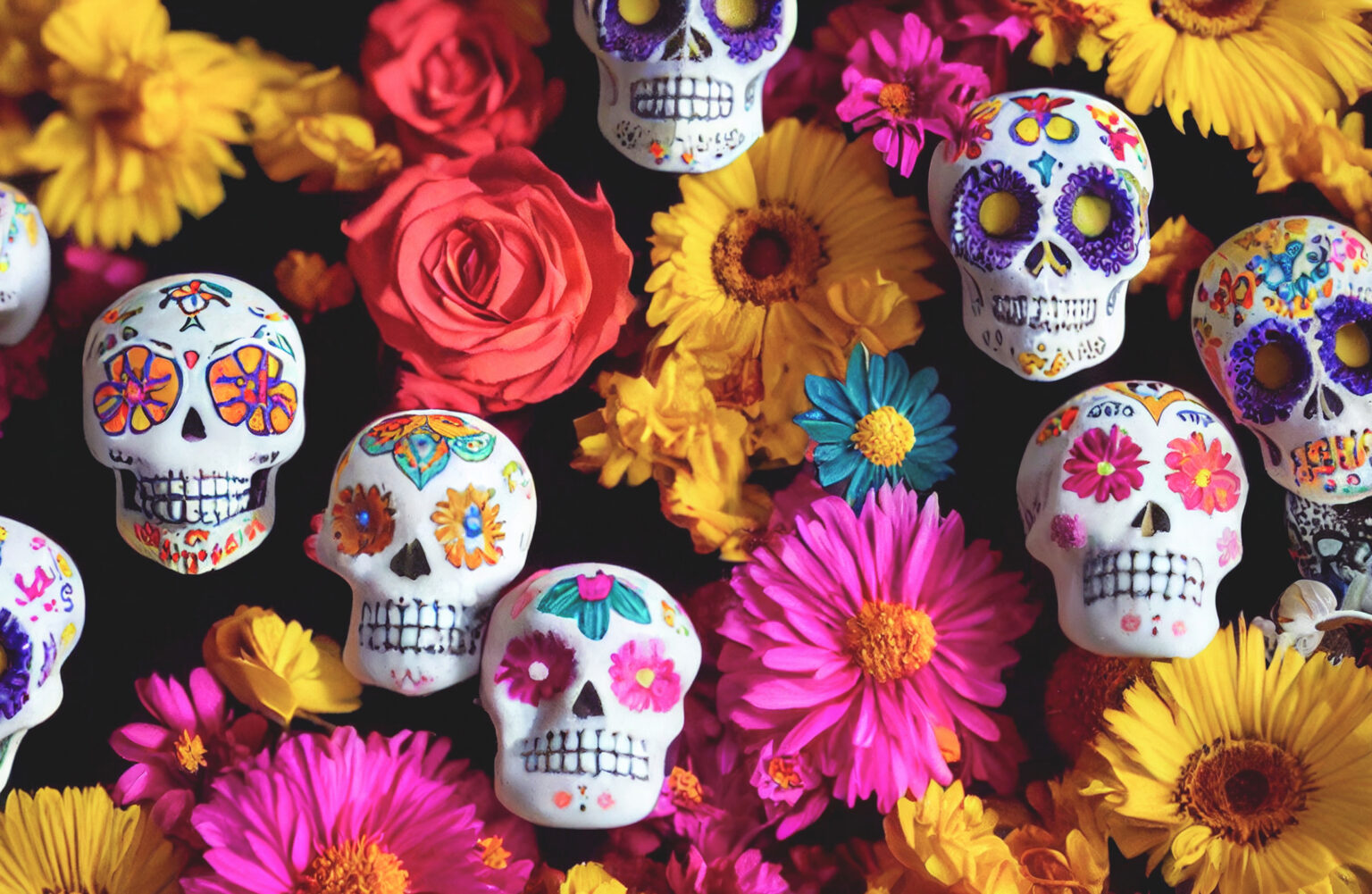
Honoring the ancestors: Sugar skulls represent the spirits of departed loved ones in traditional Día de los Muertos celebrations. | Photo courtesy of Adobe Stock
The first session on Oct. 8, “Art of the Catrina,” featured a talk hosted by the Latino Business Foundation of Silicon Valley. Jesus Flores, founder and CEO of the organization, and his daughter, Stephanie Flores Aguilar, spoke to Santa Clara students about the history of La Catrina, an elegantly dressed skeleton that has become one of the holiday’s most recognizable figures. Originally called La Calavera Garbancera, the figure was created around 1910 by Mexican printmaker José Guadalupe Posada and is often viewed as a satire of Mexicans who sought to imitate European elites. Artist Diego Rivera later popularized La Catrina in his 1947 mural Dream of a Sunday Afternoon in Alameda Central, portraying her in sophisticated clothing.
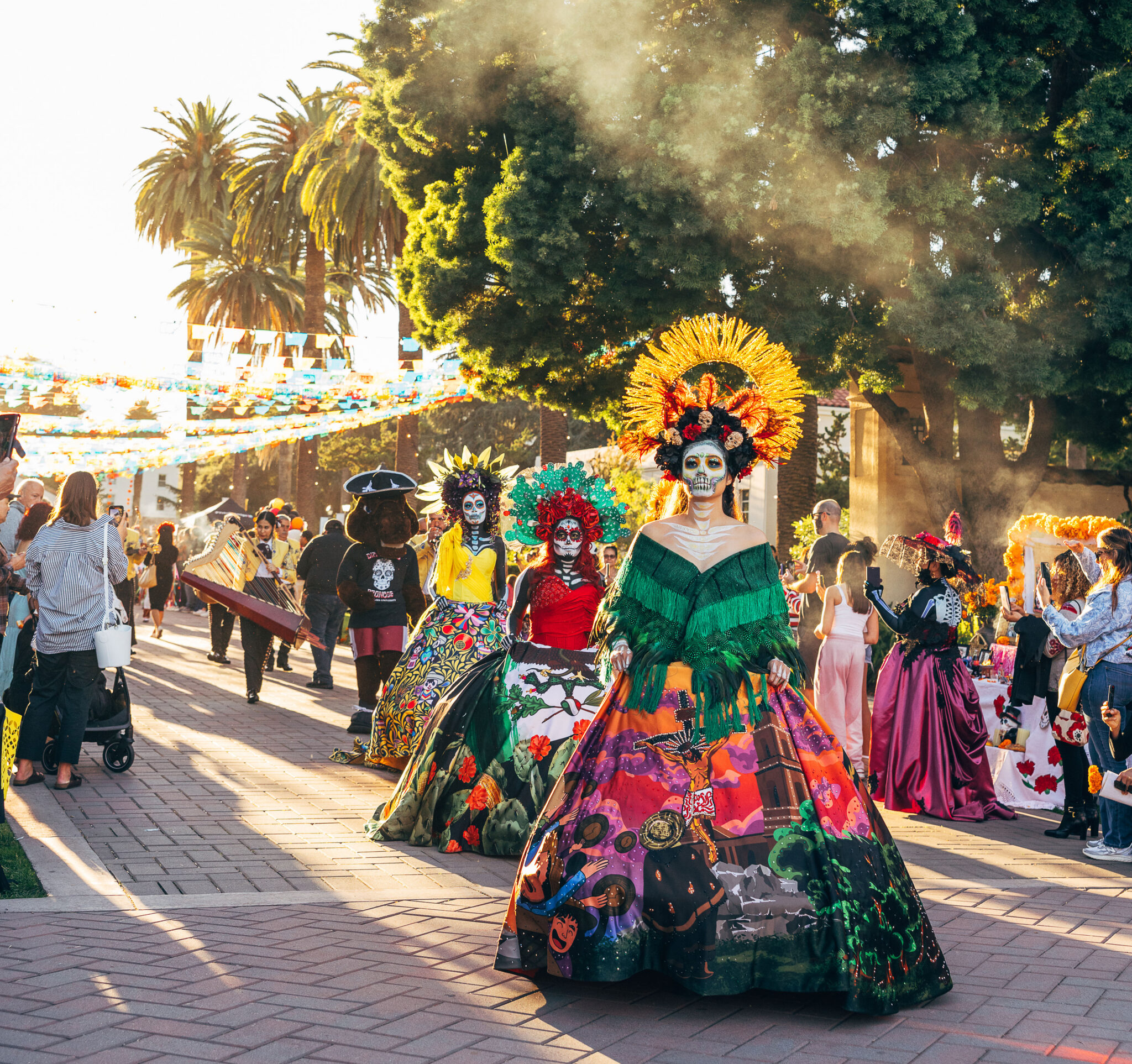
The session also previewed the foundation’s Catrina presentation for this year’s Camino de los Muertos. Alejandra Quintero ’28 spoke to attendees, sharing her experience portraying La Catrina at last year’s celebration, where she walked through the University’s Mission Courtyard dressed in a copper and sage mermaid-style gown and white skull makeup. Quintero grew up celebrating Día de los Muertos with her family and will return as a Catrina model at this year’s celebration.
“Not only am I honoring my loved ones, I am also representing my culture and sharing it with the rest of the community,” says Quintero.
For the past two years, the Latino Business Foundation of Silicon Valley has partnered with Santa Clara to bring Las Catrinas to campus. The foundation commissions elaborate, custom-designed dresses by designer Ana Gia for student models to wear as they interact with guests and pose for photos. The foundation also brings local vendors to the event, connecting the campus community with local Latino businesses.
Through both the Catrina presentation and the educational sessions, organizers hope to give the campus community a better understanding of the traditions and cultural significance of Día de los Muertos.
“Camino de los Muertos has become a cherished opportunity to welcome people from across the region to campus,” says Plaza. “I’m excited about how these sessions create opportunities for our community to share in the traditions that make Día de los Muertos so meaningful. There’s so much joy in learning from one another, building community, and celebrating our cultural traditions together.”
The fourth annual Camino de los Muertos celebration will take place at Santa Clara University on Nov. 1 from 3 p.m. to 8 p.m.