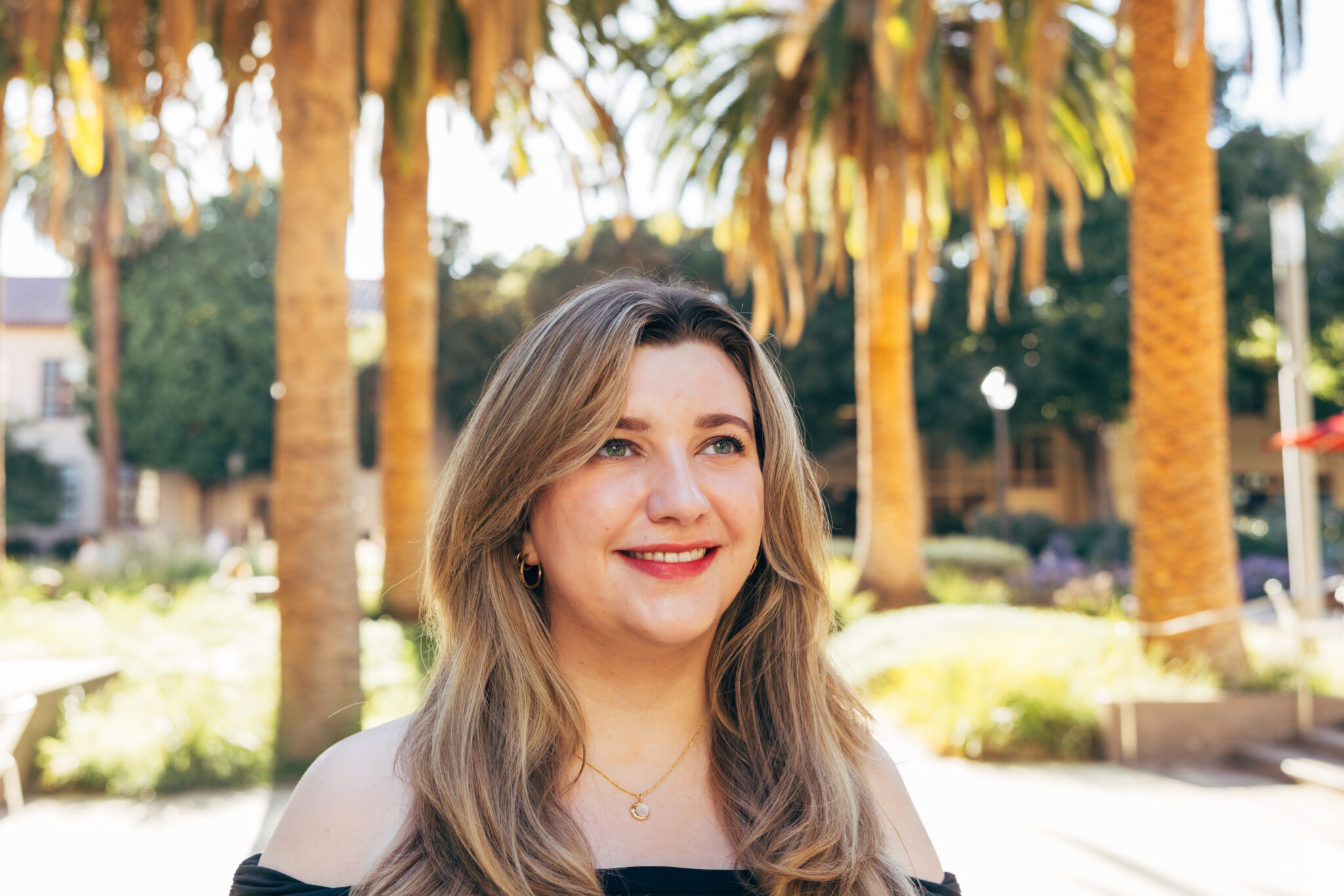
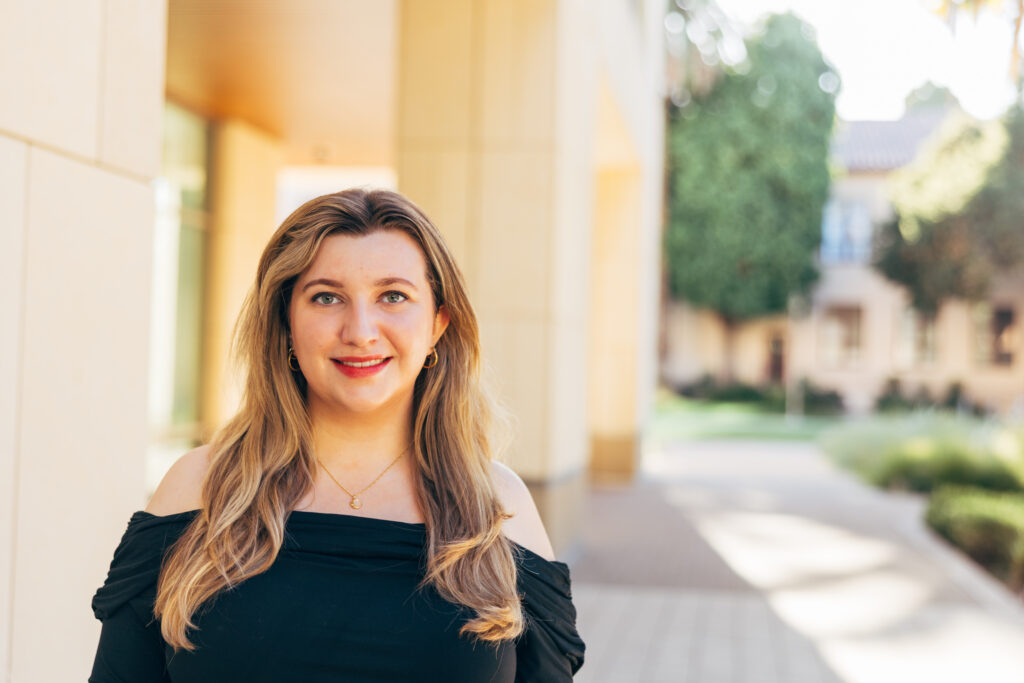
For years, Sylvana Domokos ’27 suspected she had endometriosis—a condition where uterine tissue grows outside of the uterus, causing chronic pain and sometimes infertility. After multiple medical consultations, an excision surgery finally gave her “a new lease on life,” allowing her to hike and go to school events again.
The win inspired her to write about endometriosis care as a Health Care Ethics Intern last year at Santa Clara University’s Markkula Center for Applied Ethics. The internship gives pre-med students a grounding in ethical thinking through independent research projects.
Endometriosis affects roughly one in 10 women, yet diagnosis takes seven to 10 years. In her Markkula Center essay “The Ethics of Endometriosis Care: When Invisibility Becomes Injustice,” Domokos argues this is “a credibility issue rather than a scientific mystery,” since patients’ pain is often dismissed long before science fails them—and it does fail them because of gendered double standards.
“Erectile dysfunction affects a comparable percentage of men,” she writes, “and it receives six times more research funding than endometriosis.”
Shortly after her endometriosis article was published, she was scrolling through her LinkedIn notifications when she saw a comment from a fellow Bronco she had never met. It read:
“You were actually the first person who introduced me to endometriosis, and I never forgot that. A month ago, after an MRI and multiple hospital visits, I finally got my diagnosis.”
“Reading that comment, I cried,” recalls Domokos. “I was just so happy I helped someone who was going through what I went through. There’s a lot of stigma around endometriosis, so I want to normalize it.”
This year, Domokos continues her advocacy as the Markkula Center’s Honzel Fellow, a role where she’ll mentor other students interested in health care ethics and, hopefully, change how we think about other chronic illnesses.
Leading through experience
Domokos’ first chronic diagnosis came at just the age of four. It’s since grown into several autoimmune conditions that require round-the-clock medications and a deep respect for doctors who support complex patients like her.
Her interest in health treatment encouraged her to learn more about neuroscience and work part-time as an EMT. But then, during her first semester at Santa Clara University, she contracted COVID and developed myalgic encephalomyelitis (ME)—also called chronic fatigue syndrome (CFS)—which left the former high school athlete struggling to walk and bedridden for most of a year, having to start and stop several quarters of classes.
“It certainly brought me a lot of grief, because I had a very non-traditional college experience,” she reflects. “But now I’m in acceptance and problem-solving mode, advocating for students like me as the new vice president of the Disabled Students Union.”
Aside from a community of peers, Santa Clara connected Domokos with mentors who helped her forge a career path into medicine. In particular, Guadalupe Hayes-Mota, the director of the Bioethics Program at the Markkula Center for Applied Ethics, showed Domokos for the first time that the career of “doctor” was possible for someone without doctors in her family.
“Seeing someone else with his own rare, chronic disorder succeed has been super impactful, both personally and professionally,” Domokos notes. “Because of his encouragement, I applied for the Honzel Fellowship, which cemented that I want to do public health and advocacy work.”