

Share
Print

On building bridges of connection between men

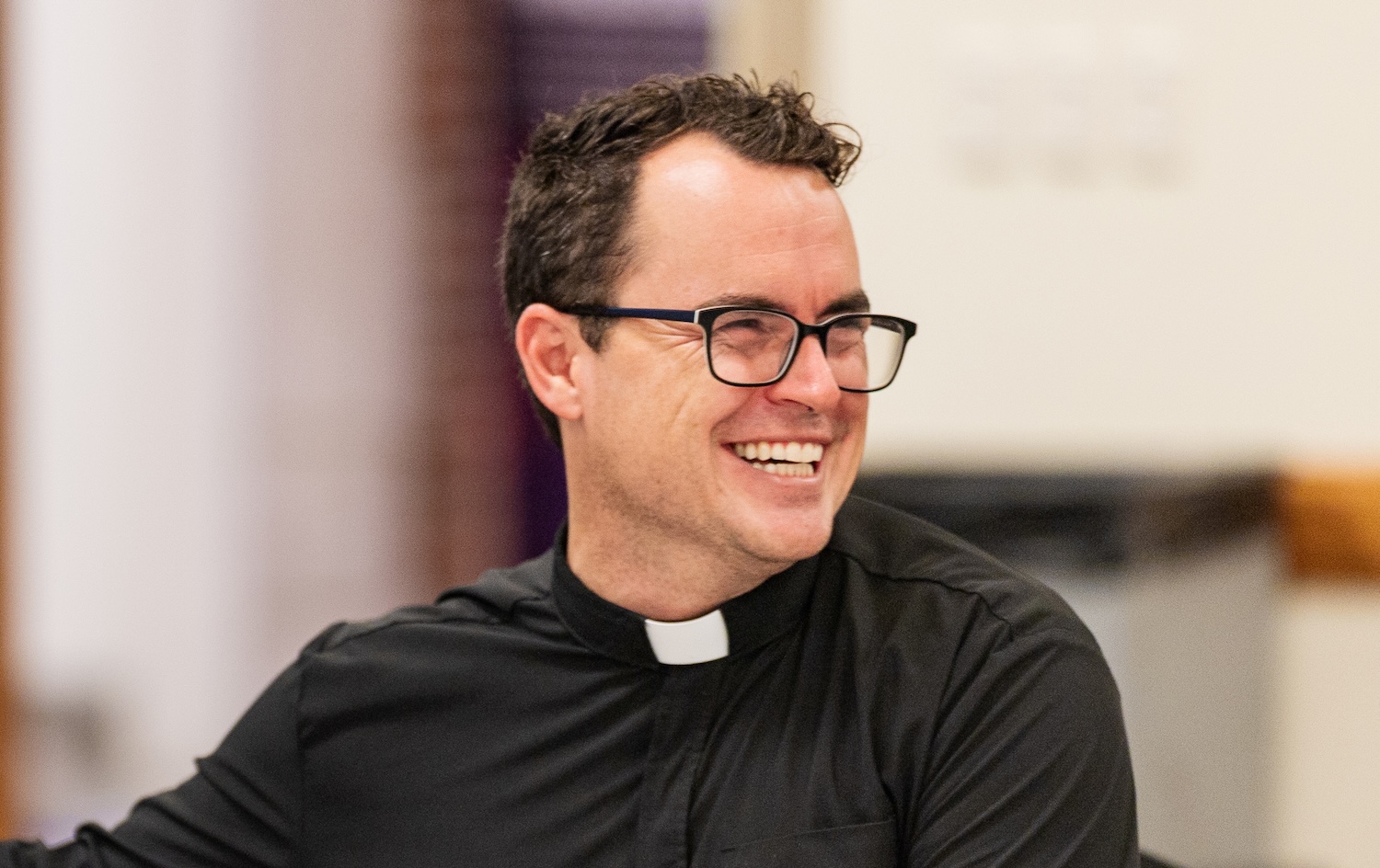
Matt Wooters, S.J., MTS ’21 responds to the male loneliness epidemic by encouraging men to intentionally gather and share their sorrows and joys.
A bespectacled Jesuit brother in black shirt and white priest collar smiles to the side.
Photo courtesy Matt Wooters and John Carroll University
12 Nov 2026
by Ginger Monroe

Coming of age and experiencing his formation in the age of the male loneliness epidemic led Matt Wooters, S.J., MTS ’21 to ask how he can respond given his unique position as a Jesuit brother. Upon arrival at John Carroll University in Cleveland, Ohio, he found a way through a group he calls Brothers’ Keeper.

Wooters started Brothers’ Keeper to create a space of community for male students on campus. “One of the needs in the world and in America right now is this sense of community for men,” he says. In a guest column for Cleveland.com, Wooters cites the former U.S. Surgeon General’s declaration of loneliness as a public health crisis. “Research reports that a growing share of men say they have no close friends at all,” and do not feel emotionally supported, he writes. “Many college-aged men are told, explicitly or implicitly, that independence, toughness, and self-reliance are the marks of success.”

After spending his educational career in Jesuit spaces and eventually joining the order after two years as a volunteer in Belize, Wooters says, “Jesuit education has made me uniquely attuned to building community.”

Through Brothers’ Keeper, which is rooted in the Ignatian tradition, Wooters invites students to share meals together without the presence of technology. This intentional gathering creates space for reflection and community-building. They discuss topics like where they’re excelling in life, what they’re struggling with, and what is taking energy from them. “Asking these questions in the safety of community,” Wooters says, has caused a “real upswing of sharing” and a closeness between men in the group.

Compared to the often surface-level conversations that men share while, for example, playing video games together, Brothers’ Keeper offers a space for the men to come together in a deeper way. “Once the guys had this experience of authenticity,” he says, “there’s this multiplier effect where they are now modeling authentic conversation in their social spheres [and] checking in with their friends who aren’t part of the group.”

Building community is a skill that Wooters nurtured in his time at the Jesuit School of Theology of Santa Clara University (JST-SCU), when the COVID-19 pandemic struck just after his first semester and courses were moved online. Feeling the loneliness of being isolated from the vibrant community at JST-SCU, Wooters worked with Shea-Huesman Professor of Christian Social Ethics Julie Hanlon Rubio to start something they called “Park Church.”

“Matt embodies radical hospitality in the way he lives his life as a Jesuit brother,” Rubio says, reflecting on that special time they hosted liturgy outside, churchgoers sitting 12 feet apart. “He cultivates deep, spiritual friendships with laypeople, shares his joyful faith with them, and is nourished by them.”

Wooters describes loving JST-SCU’s emphasis on Pope Francis’ theology of encounter and the school’s embrace of synodal theology—a theology that puts a strong emphasis on walking and listening together as a church. “Theology of encounter is how we show up for each other. It’s sacramental: sharing food and sharing stories,” he says. “What Brothers’ Keeper and the synod invite us to is to consider what happens when we listen, and how can we be changed and challenged by our listening?”