There’s a 16th-century Kabbalah story about how the world began: God poured primordial divine light into vessels meant to hold it, and the vessels shattered. Sparks of holiness scattered everywhere, hidden inside an ordinary, broken world. Nobody chose to be born into the wreckage, but every act of righteousness, or mitzvah, is a small act of gathering—one spark retrieved, one fragment restored.
This work of a lifetime, called tikkun olam in Hebrew, or “repairing the world,” is not a metaphor for being nice when you can spare it. The word most often translated as “charity,” tzedakah, shares its root with tzedek, or “justice,” implying that charity isn’t optional kindness given from a position of comfort. It’s an act of reparation, a debt we are all expected to repay.
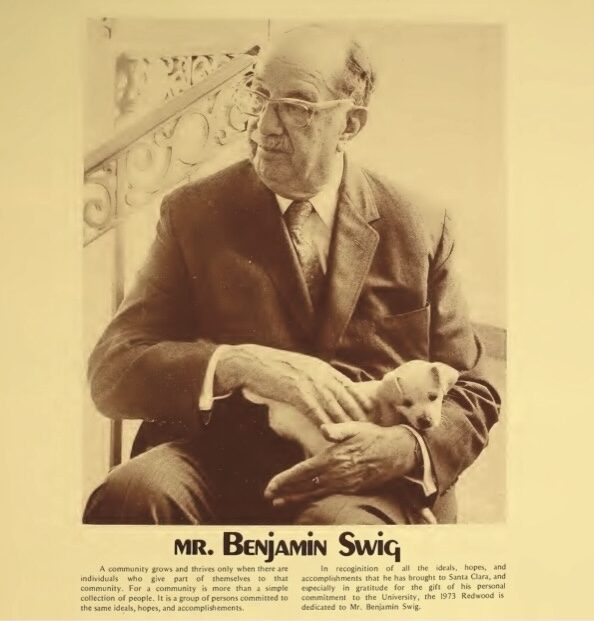
Benjamin Swig came to understand this mission intimately through a career of highs and lows.
His father, Simon, a Jewish immigrant from Lithuania, worked his way up from nothing, becoming a successful banker and state legislator in Massachusetts. Swig inherited his father’s knack for business. In fact, family lore has it that by age 10, young Ben would regularly ride a commuter train into Boston to sell newspapers before school.
But comfort didn’t protect him from loss. While Swig was serving as its treasurer, his family’s bank collapsed in the early 1920s following a retaliatory run by rival bankers. Then Swig pivoted to real estate—only to be wiped out again by the 1929 crash. He built his firm back a second time, eventually owning San Francisco’s famed Fairmont and St. Francis hotels.
While he came from wealth, losing and rebuilding everything twice seemed to leave him with an unusual amount of gratitude and perspective, drawing him toward civic and philanthropic causes, both Jewish and non-Jewish alike.
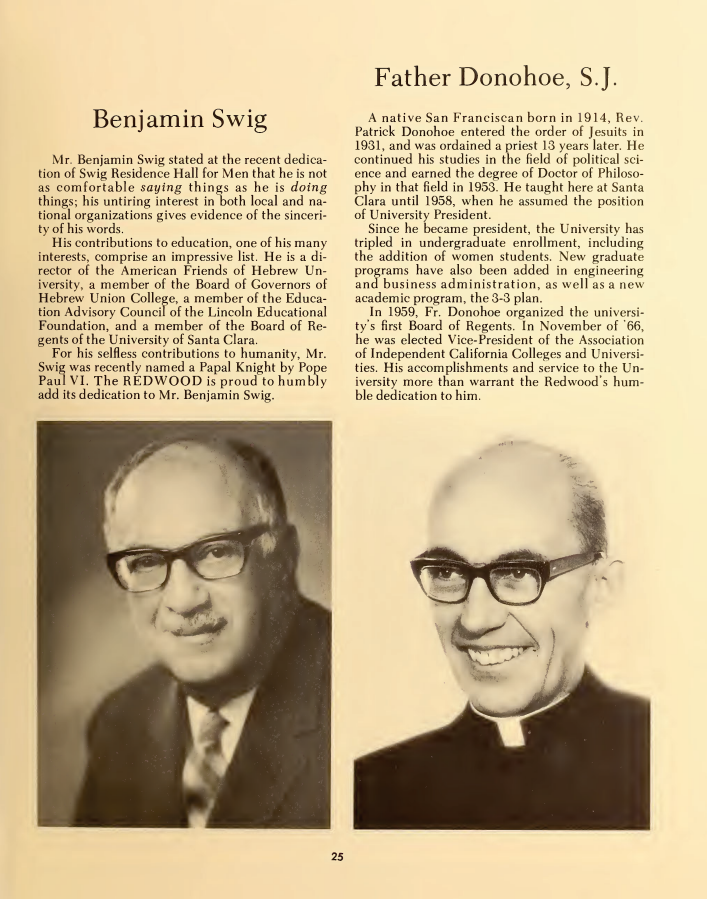
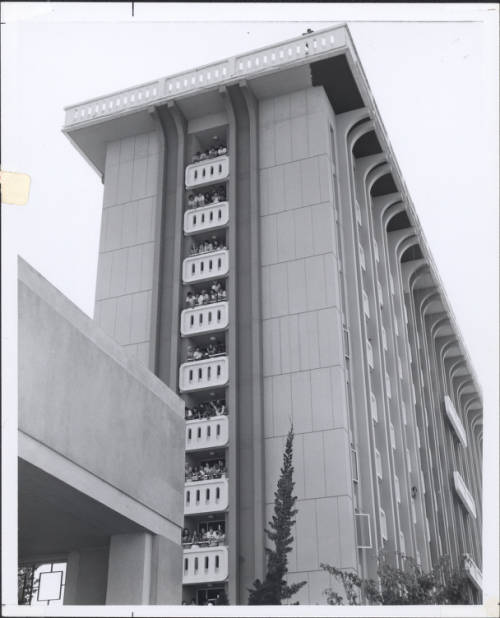
So, in 1959, when Santa Clara University’s president, Patrick Donohoe, S.J., asked Swig to join the University’s first Board of Regents, what followed was a transformative relationship between the hotelier and the University, which Swig described as his “greatest love.” Over the next 20 years, Swig gave Santa Clara more money and time than any volunteer in its history, almost single-handedly bankrolling the campus building boom of the 1960s while declining to stamp his name on any of it.