This December, a spacecraft will slingshot itself using Earth’s gravity toward an icy moon orbiting Jupiter called Europa, trying to answer one of the most audacious questions humanity has ever tried to answer: are we alone?
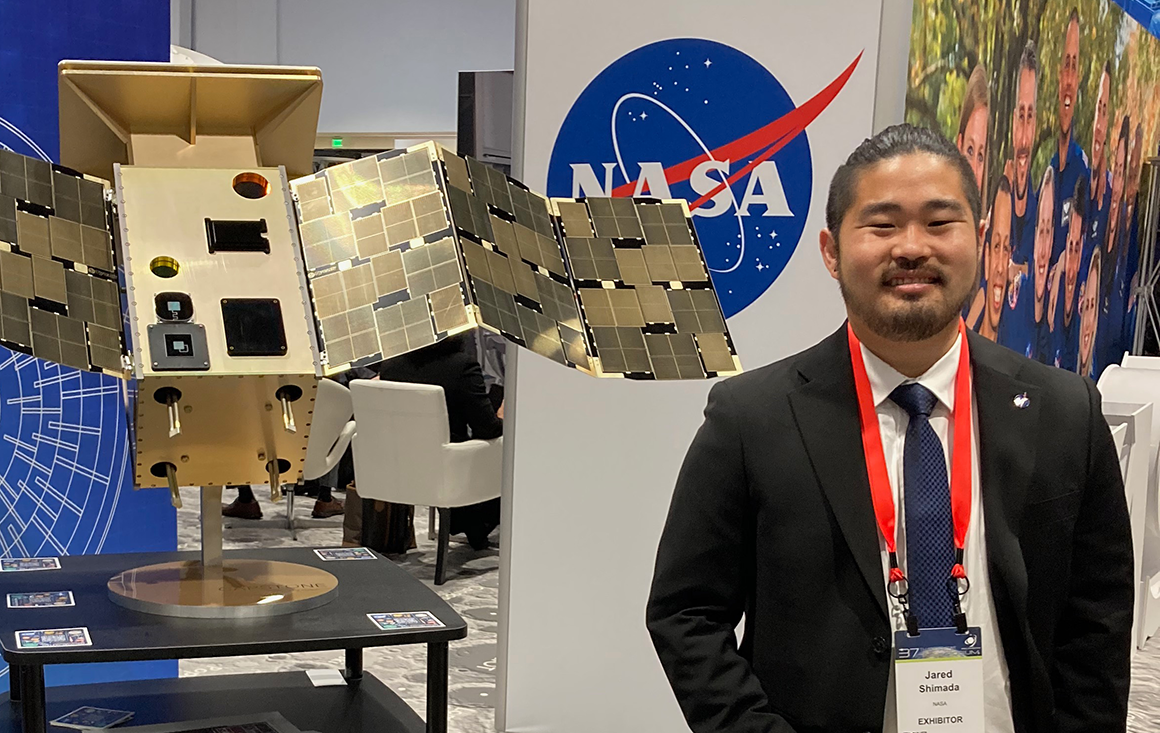
Launched in 2024, NASA’s Europa Clipper won’t arrive at its destination for another five years. But when it does, engineers like Jared Shimada ’16, MS ’18 hope to find evidence of life.
As a researcher at Astrion, a government contractor supporting NASA Ames Research Center, Shimada is busy at work building miniaturized instruments that can collect and analyze fluid samples autonomously on space probes that will never return to Earth. These probes will likely target moons such as Europa and Enceladus, whose vast, subsurface oceans are some of the most likely places in the solar system to contain the building blocks of life.
One instrument Shimada has worked on must split a sample of less than 50 microliters—roughly one drop of water—between multiple analytical tools, each hunting for something different: cell membranes, lipids, proteins, chemical signatures that shouldn’t exist unless something made them.
Another project he’s been working on, ExCALiBR, will look for life on Mars by sifting through dust and rocks for lipid biomarkers.
“We have to guess what we’ll encounter,” Shimada explains. “Is it carbon-based? Does it have the same molecular structure as life on Earth? Those are some of the things we try to look for.”
It’s the kind of complex work that requires you to hold chemistry, biology, mechanical engineering, electrical engineering, and software in your head simultaneously—and to know, with some honesty, which of those you need to hand off.
“Often when I’m working on programs, I usually just call up our software engineer,” Shimada admits, “and say, ‘Help! Is this even possible?’”
The approach mirrors two lessons he learned across classrooms, recital halls, and on the racetrack as a Bronco: 1) when you can’t be an expert in everything, you build a team that is; and 2) slow and steady wins the race.
Mind, body, and discipline
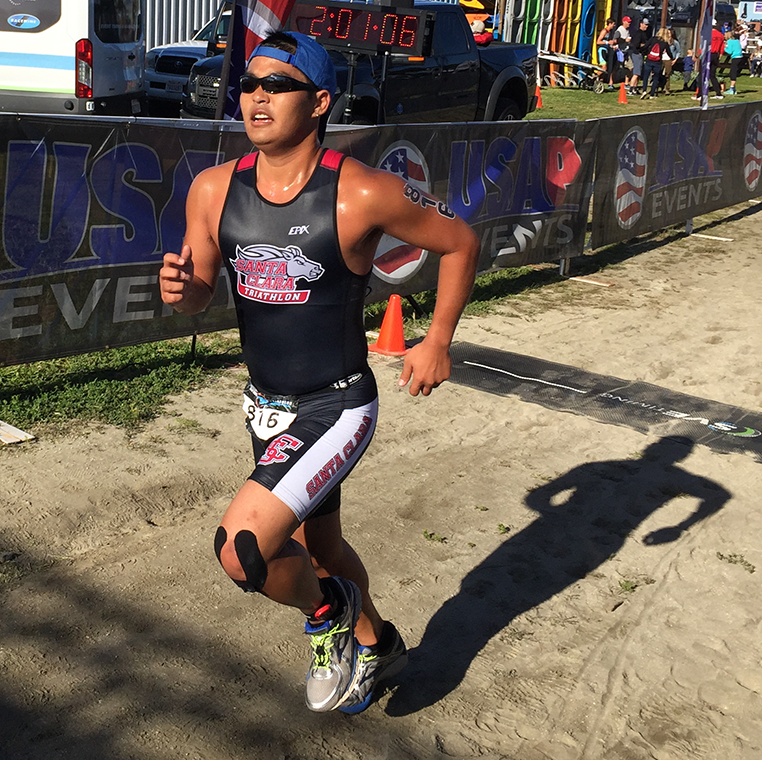
Looking back, Shimada received the epitome of a multidisciplinary education at Santa Clara. The Maui-born Bronco pursued two bioengineering degrees and a music minor while lifeguarding at the campus pool and running on the club triathlon team.
“Sleep, good grades, social life… I tried to hit every point as evenly as I could, even if it was a small triangle,” he explains. Luckily, each element of his Santa Clara experience bolstered the others.
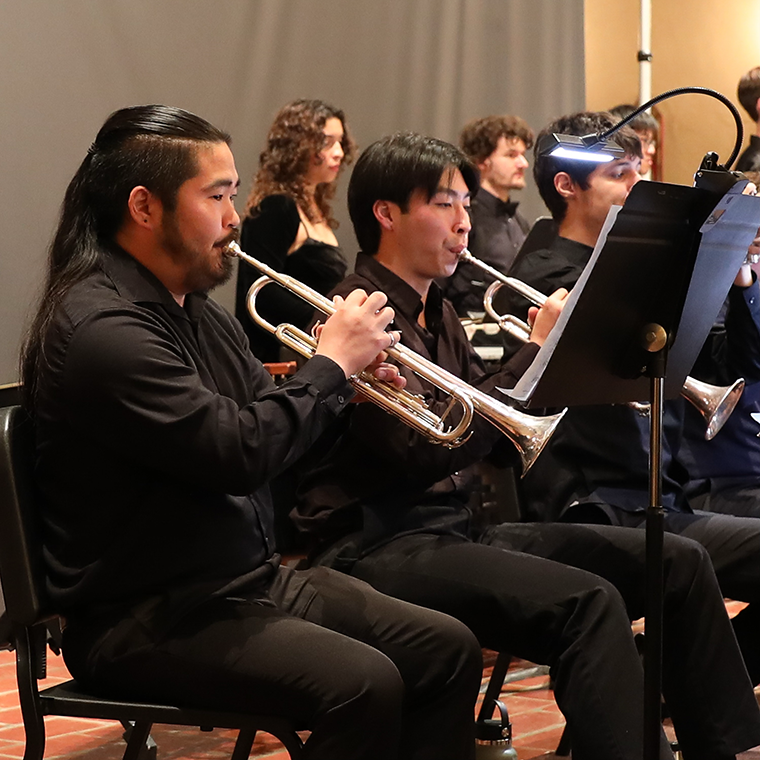
Playing his trumpet in music ensembles gave him a scheduled mental release from the technical demands of engineering, something the advisors at Santa Clara’s Drahmann Center helped him protect even when his course load threatened to crowd it out. Meanwhile, the discipline of triathlon training gave structure to weeks that might otherwise have buckled under their own weight.