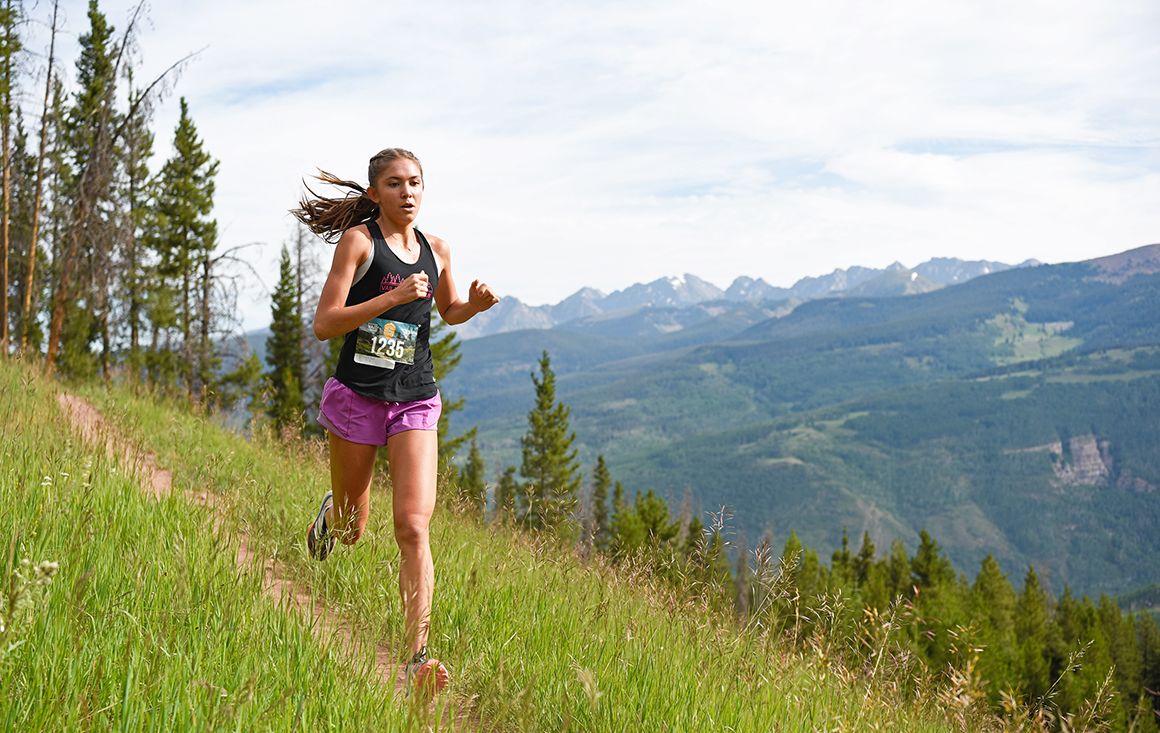
Almonte grew up in Edwards, Colorado, ten minutes from Vail, in a family where the mountains weren’t window dressing—they were her whole world. Her parents met on their college cross country team, and her mother later coached her in middle school; running was simply what the Almontes did. It wasn’t until high school that she started taking it seriously, and not until an official visit to Santa Clara that she knew where she wanted to keep doing it. What sold Almonte was the closeness of the team.
“I could tell everyone cared about everyone, knew everyone, and actually talked to everyone,” she says. “That’s just not the case on every team.”
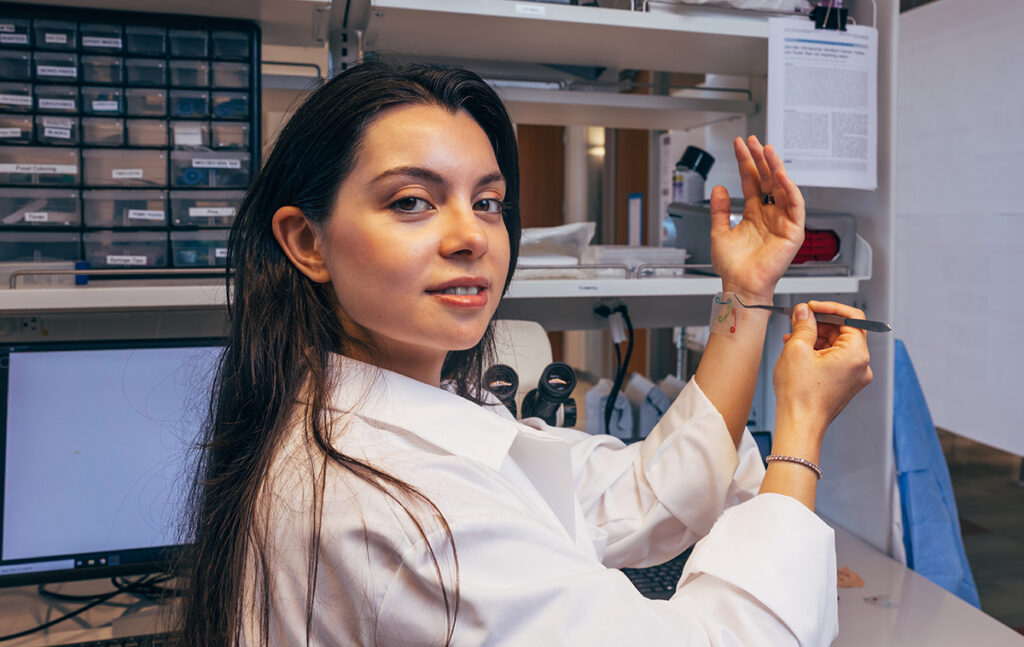
That closeness extended to the wraparound support she’s found from coaches she trusts enough to be candid with, a sports psychologist she meets with regularly, a nutritionist who builds daily meal plans around her training schedule, and professors in small classes who know her well enough to work with her when travel and racing collide with her course load.
Freshman year, she admits, the balancing act nearly buried her. It took time to find a rhythm that worked, and fortunately she had help. Now rocking a 3.8 GPA, she’s one of many academic standouts among her fellow student-athletes at Santa Clara.
Almonte describes herself as someone who came to college shy and uncertain of her own abilities. That began to shift as she found a growing trust in her training, which now shows up in how she talks about the steeplechase, one of track’s most technical events.
Steeplechase is a 3000-meter obstacle course in which runners have to navigate large barriers and water pits. Not the most coordinated, Almonte’s first attempt at the water jump ended in a face-plant.
“It really called for so much more presence and focus,” Almonte explains, comparing it to the way she might puzzle through an engineering problem. “I had to really think about the precision of my footwork and body mechanics.”
By this year’s NCAA Championships, she’d posted the second-fastest steeplechase time in Santa Clara history and become only the fourth Santa Clara woman to qualify for the NCAA West First Round in the event.
“I just got less terrified each race,” she notes.
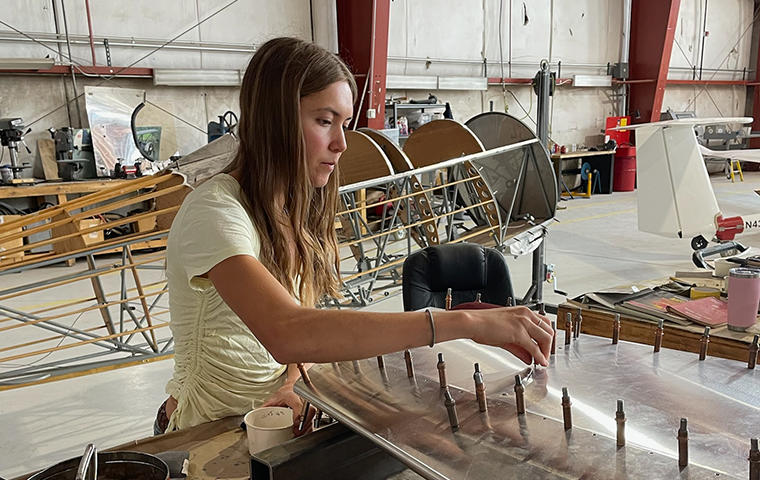
None of it, she’s quick to point out, happened in isolation—not the running, not the flying. It’s the same instinct pointed in two directions: the engineer who wants to know exactly how a barrier works before she clears it, and the athlete who’s learned to run straight into the clouds without knowing what’s on the other side.
Heading into her senior year with plans to start her master’s coursework and a shot at a conference title with her team, Almonte’s goal is simple, if not small: don’t plateau.
“Leaving high school, I wasn’t even sure I’d keep running into college,” she said. “Now I’m realizing there’s no limit to what I can keep chasing—I just have to choose to do what I love. And I’ve found that to be running.”