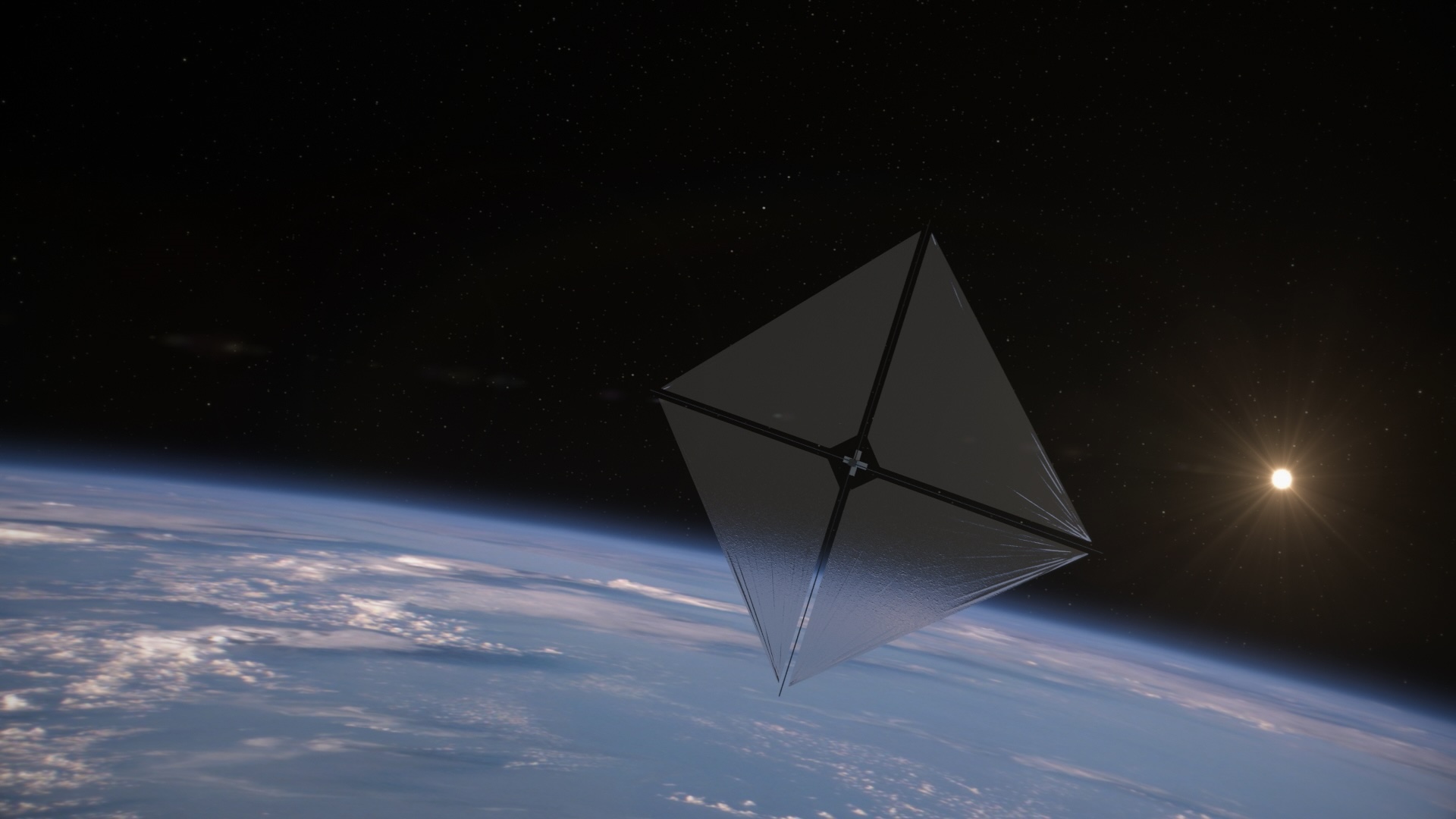
Students and faculty within Santa Clara’s Robotic Systems Laboratory (RSL) are celebrating the lab’s ninth NASA Ames Honor Award, given for outstanding contributions to the agency’s mission. This year’s prize is for the lab’s work on the NASA Advanced Composite Solar Sail System, which launched in April 2024 and tested innovative solar sail technology that uses reflected energy from the sun, rather than rocket fuel, to propel a satellite through space. The Santa Clara team functioned as the mission control center for two years. Members were responsible for tracking the satellite, transmitting commands, collecting telemetry, and performing initial analysis that they then passed on to NASA engineers.
“It was really an award for the entire professional satellite mission team. NASA civil servants, aerospace company engineers, and we were part of that team,” says Professor Chris Kitts, who established the RSL in 1999. “It’s a professional-level distinction. We even had a couple undergraduate students who were co-recipients.”
What’s unique about RSL, Kitts says, is that students have the opportunity to work as mission-critical engineers right alongside professional engineers in the industry. “No other university in the world does this to the extent that we do,” he says. “We’re actually in the critical path, so if Santa Clara got wiped off the face of the Earth, then no one could contact the satellite.”
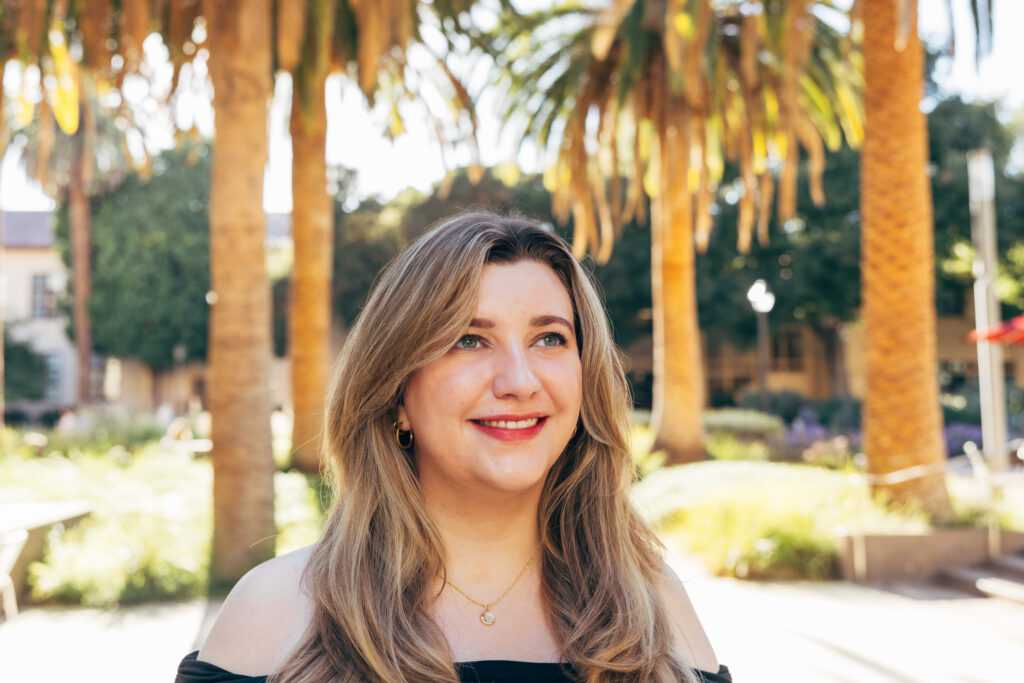
Divya Bengali ’26, M.S. ’28 is one of those award-winning undergraduates. “One of the biggest reasons I chose Santa Clara was actually the Robotic Systems Laboratory,” she says. “Working with NASA was one of my biggest dreams. … It made Santa Clara feel like a place where undergraduates could actually get involved in the kinds of projects I had always been excited about.”
As a mission operator, Bengali says coordinating with members of the broader team, including people at NASA, gave her invaluable experience and skill-building for a future career. It “taught me how important it is to understand how different parts of a system interact and to stay calm and methodical when something does not go exactly as expected,” she says.
Past award-winning RSL projects have dealt with other sorts of missions, including running biological experiments in space. Kitts is hopeful that they’ll do more such missions in the future. He says there’s exciting potential for those experiments to advance medical applications due to, for instance, the ability to study how cells behave outside the restraints of gravity. “There are a number of things that happen when you grow cells in space versus on Earth,” Kitts says. “For example, some types of cells grow much faster and larger when in microgravity while in space, which can enhance medical research.”
In addition to pushing the limits of space exploration, the RSL also contributes to important work on Earth—developing deep sea systems for scientists internationally, creating agricultural devices for local growers, and developing drone technology in collaboration with government labs. And Santa Clara students are on the front lines, working right alongside professionals. “Everybody talks about real-world experiential education,” Kitts says. “And in my book it doesn’t get more real-world than this.”