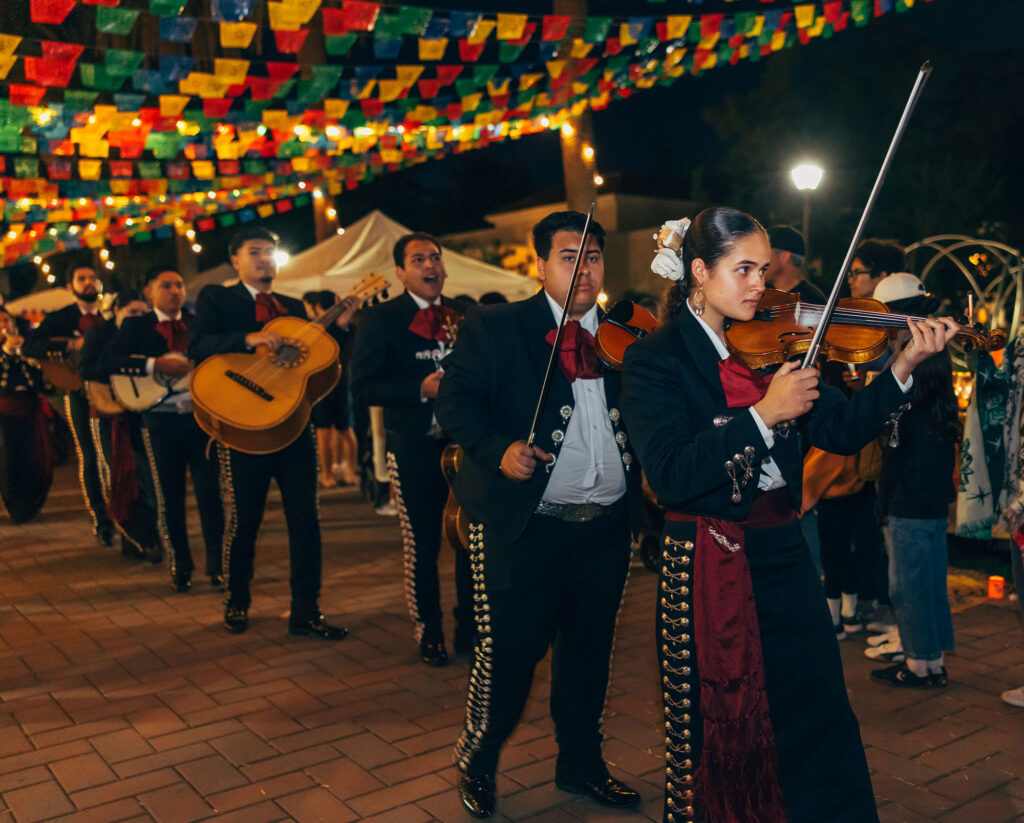
Something shifts inside a person when they travel someplace new. Whether they’re going across the globe or to a neighborhood just a few blocks away, their perspective tilts ever so slightly so that they may see the world and their place in it differently. I’ve experienced this in my own life as someone who’s studied and worked abroad and who’s traveled to more than 30 countries. And I’ve seen it in Santa Clara students in my role as the senior program director of immersions for the Ignatian Center for Jesuit Education.
Our immersion programs are designed to expose participants to different ways of life. Through the substantial amount of required preparation, students learn about context and how to recognize injustice and practice solidarity with others. But it’s only in the doing, in physically encountering a new community in a new place, that they encounter a more compassionate, more empathetic version of themselves.
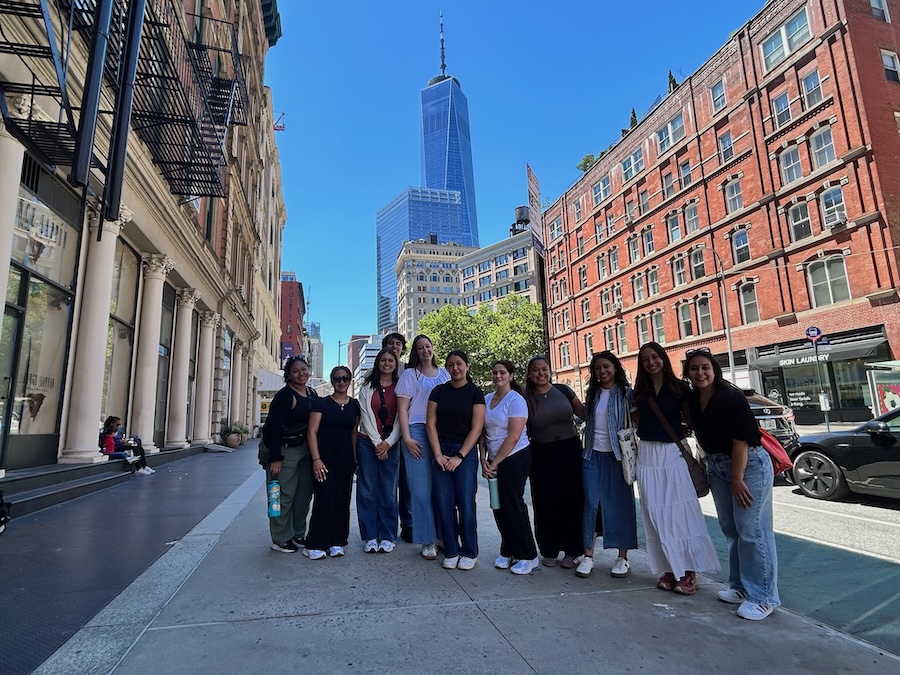
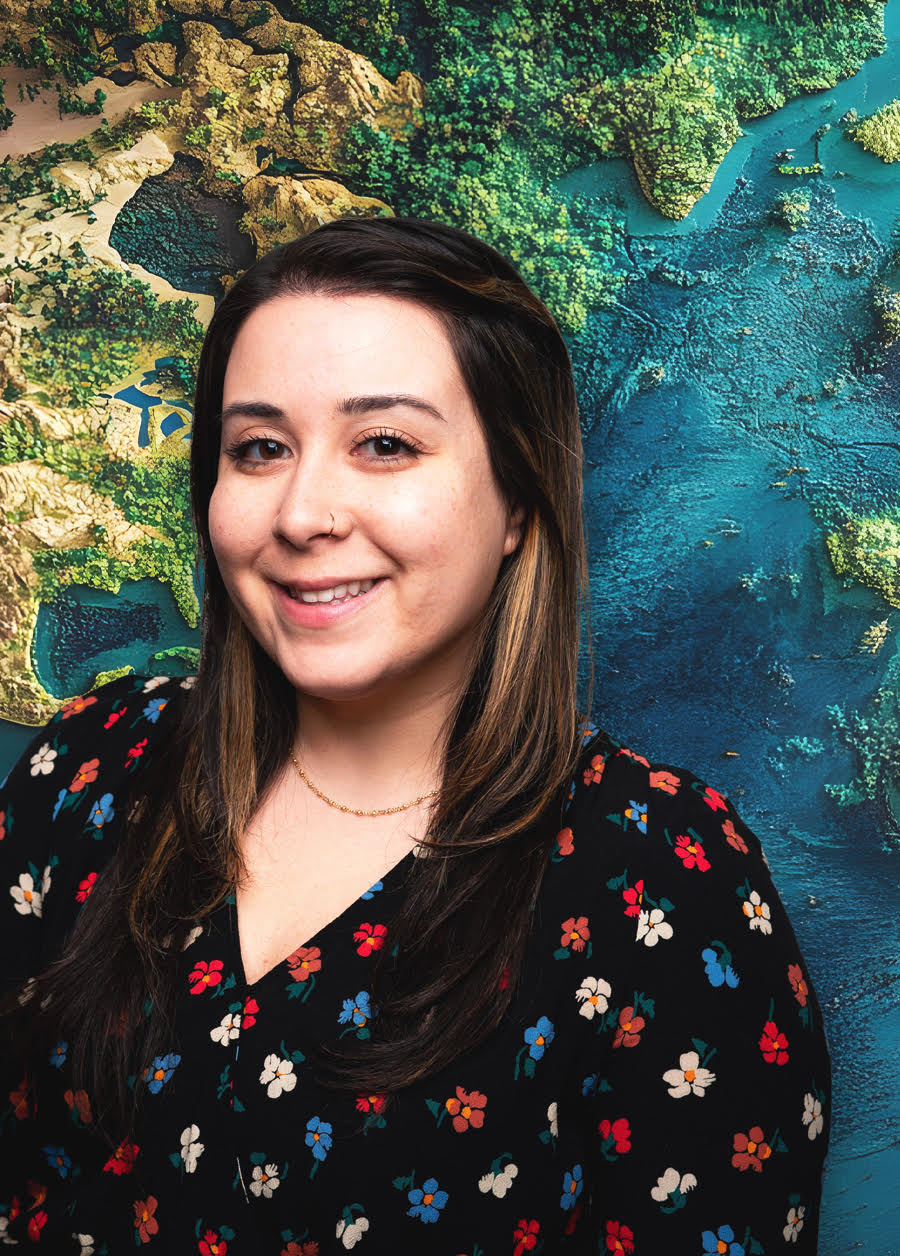
Daniella Lubey (far right) and students explored New York City during an Ignatian Center Immersion.
And they don’t have to go far. Members of the incoming class of 2030 kicked off their school year with a five-day Bay Area immersion, learning about the civic organizations working to improve mental healthcare and housing equity locally. Other students connected with farmworkers and learned about sustainability, health, and migration an hour up the coast in Half Moon Bay.
Slightly farther, some students go to New York City to accompany formerly incarcerated individuals transitioning back into society, while others travel to Appalachia to engage with communities fighting for social and ecological justice. Of course, there are international immersion opportunities, too, with communities in Peru, Costa Rica, Mexico, and Chile. The common denominator for all immersions, regardless of their distance from campus, is in the immersing.
Students have shared with me that they were initially nervous to venture outside their bubbles but were surprised by how quickly they felt warmly welcomed by both their fellow travelers and the communities they traveled to. They are grateful that their experiences on these relatively short trips form long-lasting growth. And I’m grateful to be able to witness our students come away with new perspectives and greater empathy for our common humanity.