Green carnations don’t grow in nature, but you’ll notice them in Santa Clara’s fall production of Oscar Wilde’s “The Importance of Being Earnest,” from the play’s poster to its costume design and staging.
“These flowers are artificial, and that artificiality is something that Wilde embraced,” says Benjamin Gillespie, an assistant professor of theatre history and performance studies, who is the production’s dramaturg–a literary and historical advisor to the director and creative team.
The story goes that the playwright asked friends to wear dyed green carnations to the opening of one of his plays, a coded signal only those in the know would recognize. According to Gillespie, the distinctly unusual flower marked Wilde’s hidden identity as a gay man, which included a deliberate boundary between a public life and a private life shared only with those “in the know.”
That double life—and the queer sensibilities behind it—runs as an undercurrent within the play “The Importance of Being Earnest.” Wilde’s 1895 comedy follows two bachelors who invent alter egos, “Ernest” and “Bunbury,” to slip away from society’s expectations. Their double lives collide when each falls for a woman who insists she can only love a man named Ernest.
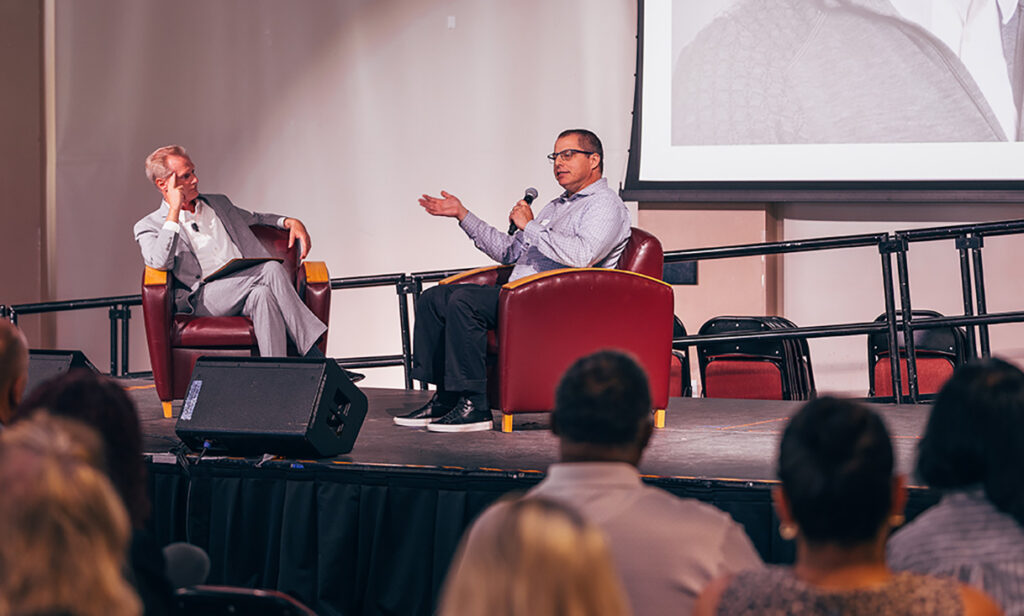
Fittingly, the Department of Theatre and Dance will be hosting an LGBTQ+ Affinity Night on Saturday, November 7, celebrating the LGBTQ+ community and Oscar Wilde’s “enduring queer wit.” Before the show, Gillespie and director and department chair Kimberly Mohne Hill will host a reception featuring a short conversation about the play’s queer content and themes, lobby displays from the creative process (including materials from costume designer Katie Dowse), and a Wilde- and “Earnest”-themed crossword.
Tickets are free for students, and faculty, staff, and community members can use the code PRIDE40 for discounted tickets.
In anticipation of the event, we sat down with Gillespie to discuss Wilde’s knack for comedy and the power of theatre to gather people across society.
How did the idea for this LGBTQ+ Affinity Night come about?
This quarter I’m teaching a class called “Queer Drama After Wilde,” and it was kismet that we were doing “The Importance of Being Earnest” at the same time. I wanted to bring what we’re studying in that class—queer plays and performances in the period after Oscar Wilde but influenced by his work and life—to a wider audience.
I don’t believe we’ve had an LGBTQ+ Affinity Night on campus before, and I wanted to bring my experience of these events in the broader theatre community in New York and other cities, especially for the work of a major queer playwright.
The Department of Theatre and Dance and SCU Presents were on board right away. We also partnered with the Office for Campus Climate and Belonging, the Office for Multicultural Learning, and the Department of Gender and Sexuality Studies.

Benjamin Gillespie
For readers who aren’t familiar with Oscar Wilde, why is he significant within LGBTQ+ history?
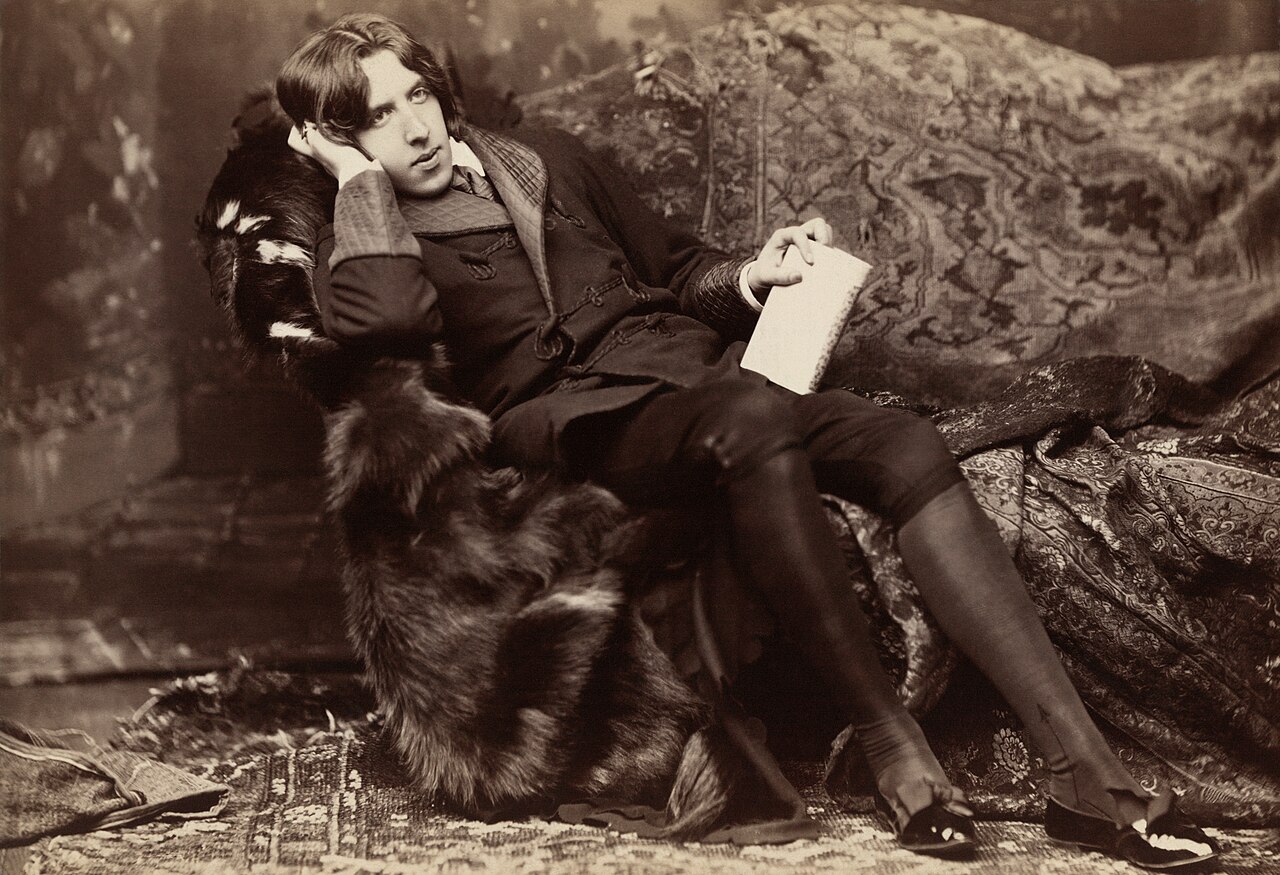
Wilde was writing at a time when homosexuality wasn’t an identity category in the way we understand it today. People were identified through the acts they committed, which were criminalized—and tragically, this happened to Wilde.
“The Importance of Being Earnest” premiered in February 1895, at the height of Wilde’s popularity. Later that year, Wilde was arrested for his secret relationship with Lord Alfred Douglas, and ultimately convicted of “gross indecency.” He was sentenced to the maximum penalty of two years of hard labor, and it completely destroyed his life. He died in 1900, at 46, as an outcast.
How did Wilde’s identity influence this play in particular?
I’d argue “Earnest” is a very queer play, though not explicitly so. There are no gay or lesbian relationships portrayed on stage, but there’s a lot of double consciousness: the characters lead different lives in the city and the country. Much of the play is homosocial, with the sexes spending time apart. Love is treated as trivial, and the women declare love for men before they really know them, based on an arbitrary name. Algernon sneaks off to the country to visit his sick friend “Bunbury,” an escape he calls “Bunburying.” Any queer person who hears that understands what a double life can mean. There’s also coded language, lavender marriages, and even the word “earnest” has some queer etymological roots.
You can perform the play without thinking about Wilde’s identity or its queerness, but I think you do it a disservice without acknowledging it. The idea behind this event is to bring more of the campus community into that conversation.
The event also celebrates Wilde’s infamous wit. Tell us a little about the comedy in “The Importance of Being Earnest.”
Wilde is famous for his epigrams—witty phrases that turn the meaning of language on its head. The epigram “The truth is rarely pure and never simple” comes from this play, and there are plenty of other great one-liners in the show.
Lady Bracknell is one of the funniest characters in all of Western literature—and she says at one point: “Never speak disrespectfully of society. Only people who can’t get into it do that.” Later, after Jack reveals he was found as a baby in a handbag, she says, “To lose one parent, Mr. Worthing, may be regarded as a misfortune. To lose both looks like carelessness.” It’s the opposite of what you expect a character to say, and that topsy-turviness makes the play incredibly funny.
If you ask me, comedy is often more political than tragedy. We think of tragedy as the superior genre, but you can make a lot of points through comedy. All of Wilde’s plays are political, and they’re about visibility and playing with language.
Theatre brings people together, and I think Wilde knew that and chose to write plays—in addition to a novel, short stories, and poetry—for that reason. Theatre lets you gather people, poke fun at society, and challenge its strictures and mores. Here, “Earnest” satirizes the upper classes and marriage as an institution.
Even in the Bay Area, and in a theatre setting that’s already inclusive, why does an Affinity Night matter?
Santa Clara is an inclusive space—I’ve felt that as a relatively new faculty member who joined last year. But even in inclusive places, different communities can be siloed. There are student groups, faculty groups, and staff groups, but they don’t always come together. My goal with this event is to change that. We’re also reaching out to alumni for this event. When alumni come back and students meet them, students see how many possibilities there are for their own futures.